For this week’s blog, I want to try something new and different. Rather than exploring a specific concept, I want to analyse the musical components behind one of my favorite classical pieces of music. These components include structure, chord progressions, and stylistic details. This song also happens to be the same piece that I will be performing this upcoming weekend at the Solo and Ensemble Festival: Franz Liszt – Liebestraum No. 3.
Composed in 1850, Liebestraum is a piece from the Romantic era of art and music in Europe. Franz Liszt actually released three songs under this name as a set, but the third is definitely the most widely known and popular. Liebestraum is a German word that translates to “love dream” or “dream of love”.
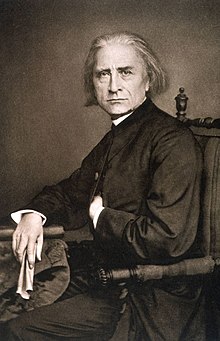
As far as the musical structure of the piece, Liebestraum No. 3 can be divided into three sections, each separated by a fast cadenza that requires a high ability of finger dexterity. In all of the three sections, the same melody is repeated, with slight variations every time. The first section introduces the melody at a relaxed tempo and with soft dynamics, or volume. After the first cadenza, which is a short, fast section that utilizes a large range of notes, the second section begins. This part is much faster, louder, and more dramatic, and the climax of the piece occurs in this section. Finally, after a second cadenza, the third section ends the piece by returning to the initial tempo and dynamics.
The second cadenza (2:38-2:54)
In terms of the chord progression of the song, the piece follows the following pattern during the main melodic section:
I – III7 – vi7 – ii7 – V7 – I
Just from this specific part, it is evident that Liszt uses many 7th chords in the composition. This kind of writing was much different from styles used in the preceding Classical period of music, which happened from 1750-1820. By using radical and innovative ideas such as this, Liszt had significant influence on the musical advancements made during the Romantic period.
Stylistically, Liebestraum No. 3 displays even more in the way of 19th century Romantic ideas. Liszt takes the piece even further from the previous era’s restrictive style by including specific notations throughout the composition. For example, the piece opens with the directions “con affetto”, or “with emotion”. After the first cadenza, the word lunga appears, which instructs the pianist to hold the rest for however long they feel is necessary, a concept that is unheard of in late 18th century classical music. The second section is supposed to be played “più animato con passione”, or “more animated with passion”. Finally, Liszt writes to play the end of the second section “cantando espressivo”, or “singing expressively”. Once again, these kinds of stylistic details clearly display why Liebestraum No. 3 is such a great example of a piece from the Romantic era.
Overall, Liebestraum No. 3 makes effective use of structure, chords, and details to create a unique and innovative piece that receives well-deserved attention. The ideas that Franz Liszt used in the composition reflect the Romantic era extremely well.
But that’s just a theory. A music theory.
-gwilliams5
 Music Theory Blog
